 Indonesian
  English
  Spanish
  Arabic
  Portuguese
  Russian
  French
  German
  Korean
  Japanese
  Italian
  Turkish
  Vietnamese
  Thai
Thai  Dutch
Dutch  Hebrew
 A strategic guide to sourcing Polyester POY: why POY quality shapes DTY/FDY stability, fabric performance, sustainability compliance, and buyer risk control. Learn how to specify POY, compare suppliers, and upgrade your yarn sourcing model.
A Real Conversation from the Sourcing Desk
“We’ve always treated Poliester POY as just a feedstock,” the purchasing manager admitted during a mill visit. “But now my knitting supplier is asking for specific POY specs—denier, filaments, even spin finish. How do I know what really matters?”
The technical director smiled.
“If you just chase price, you’ll get yarn that works ‘most of the time’. If you understand how Poliester POY drives yarn quality, fabric performance, and sustainability, you’ll buy smarter—and your brands will feel the difference in every garment.”
That’s exactly what this guest post is about: how to treat Poliester POY not as a commodity line item, but as a strategic lever in your yarn sourcing. We’ll walk through performance parameters, policy and sustainability shifts, real case studies from global buyers, and a practical checklist you can use with suppliers and partners.
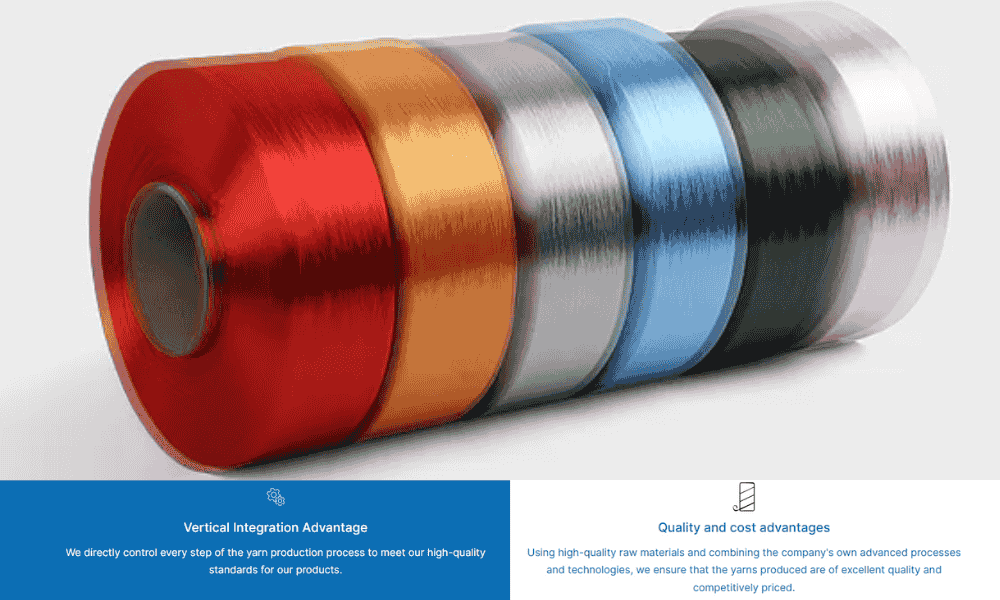
Polyester POY Suppliers
Why Polyester POY Is the Hidden Engine of Modern Yarn Manufacturing
For many non-technical sourcing teams, Poliester POY sits in the background—something spinners convert into DTY or FDY and then “the yarn just arrives”. In reality, POY quality largely determines:
-
How stable your downstream DTY/FDY production will be
-
How consistent your fabric feel, dye shade, and appearance are
-
How much waste and rework you accumulate in a season
If you want a deeper technical overview, the article on the role of Polyester POY in global yarn manufacturing is a good conceptual starting point.
Modern fiber research shows that small variations in POY tenacity, elongation, crystallinity, and spin finish can cause measurable changes in DTY evenness, pilling resistance, and fabric handle. In practical terms, that’s the difference between:
-
A sports T-shirt that feels soft and stable after 30 washes
-
And a “similar” T-shirt that bags out, pills, and loses color after a few weeks
This is why more brands are pulling POY decisions up into their sourcing strategy instead of leaving everything to spinners.
How Polyester POY Is Reshaping Yarn Industry Priorities
In recent years, industry data from major polyester clusters in Asia has shown a clear pattern: mills that lock in predictable, high-quality Poliester POY run with fewer breaks, more stable DTY properties, and higher first-quality yields. That advantage compounds over millions of kilograms.
Analysts tracking global filament markets have already argued that Polyester POY will dominate the yarn industry in 2025 in several segments, especially where brands need:
-
Reliable bulk and elasticity for athleisure and sportswear
-
Stable denier and uniform crimp for circular knitting
-
Controlled luster and dye uptake for fashion weaves
This isn’t just a trend-line claim. Process audits in large mills have repeatedly shown that consistent POY quality reduces DTY off-grade rates, cuts machine downtime, and improves shipment reliability. In a world where lead-time pressure and buyer audits are tightening, POY has quietly become a strategic risk-management point.
Policy, Sustainability and Polyester POY: What Buyers Can’t Ignore
Sustainability frameworks have moved from “nice to have” to hard sourcing criteria. Brands are now being asked not just what yarn they buy, but bagaimana the feedstock is produced, certified, and documented.
Recent analyses on Polyester POY and policy shifts in a changing global landscape highlight three pressure fronts:
-
Recycled content expectations – more buyers want rPET-based POY with verifiable chain-of-custody.
-
Chemical and emission standards – spin finish, antistatics, and process auxiliaries must meet rising thresholds.
-
Traceability and data transparency – yarn characteristics must be linked to batch, plant, and process data.
Major textile associations in Europe and Asia have publicly praised supply-chain platforms and service providers who help mills and buyers translate these policy changes into practical sourcing decisions, instead of vague “green” claims. That’s where a structured view of Poliester POY becomes a competitive advantage: you can meet performance requirements and regulatory expectations at the same time.
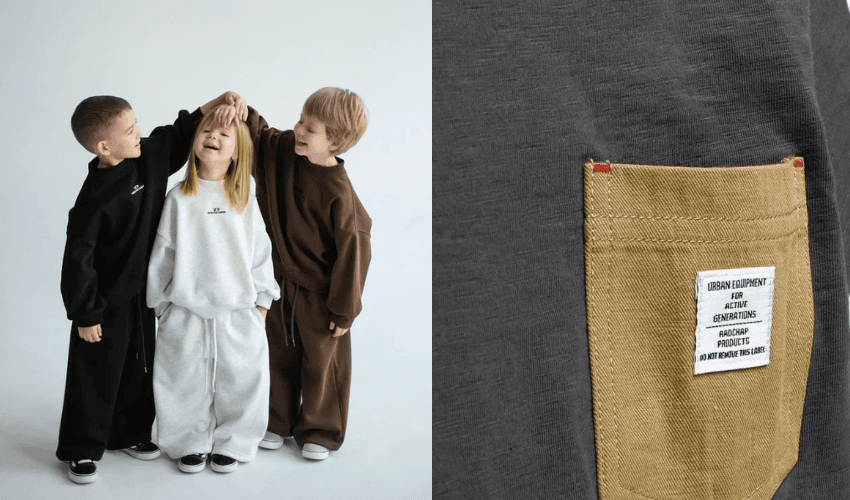 Polyester POY for clothing |
 Polyester POY for Home Decoration |
How to Match Polyester POY Specs to Real Applications
The most common mistake in sourcing is treating all Poliester POY as interchangeable. In reality, different applications are sensitive to different POY parameters:
-
Sportswear and athleisure knits
-
Prefer finer denier per filament, good elongation, and stable crimp potential.
-
Require clean spin finish to run at high knitting speeds.
-
-
Fashion wovens and linings
-
Need controlled luster (semi-dull vs bright), low defect count, and even dye uptake.
-
-
Home textiles and upholstery
-
Need higher denier, higher tenacity, and robust abrasion performance.
-
For example, a buyer specifying 100% Polyester POY 150/48F is already encoding a performance profile: 150 denier for fabric body and strength, 48 filaments to balance handfeel and processability. That spec behaves very differently from a finer 75/36 or a higher-filament 150/96 POY.
When you align POY parameters with end-use instead of just asking for “whatever is cheapest at this denier”, you reduce fabric surprises, shade variations, and unexpected handfeel changes between lots.
Understanding Partially Oriented Yarn (POY) in the Process Chain
To use Poliester POY strategically, you must see it in the context of the full filament chain: chips → spinning → POY → DTY/FDY → fabric.
Technically, POY is a Benang Berorientasi Sebagian (Partially Oriented Yarn, POY):
-
It’s not fully drawn; orientation and crystallinity are incomplete.
-
It is designed specifically to be drawn and textured into DTY or further drawn into FDY.
-
Its “in-between” state is exactly what enables later texturing to impart bulk and elasticity.
Bad POY here means:
-
More breaks during draw texturing
-
Uneven crimp development
-
Higher Uster CVm and imperfection index in DTY
-
Ultimately, less predictable fabric performance
Good POY, by contrast, gives spinners a stable base. The result is smoother DTY, fewer barre issues in fabric, and more consistent physical properties across lots—critical for brands that sell coordinated collections or repeat programs year after year.
How TextileSupplyChain Fits In: From Raw Data to Actionable Sourcing
A recurring complaint from sourcing managers is:
“Every mill tells me their POY is ‘high quality’. How do I compare them in a structured way?”
That’s exactly the gap a platform like TextileSupplyChain is positioned to fill:
-
Translating technical yarn parameters into buyer-friendly language
-
Mapping which Poliester POY specs fit which applications (knits, wovens, home, automotive, etc.)
-
Highlighting mills that can provide not only material, but also test data, certificates, and process transparency
In one internal case study, a brand struggling with fabric barre in a T-shirt line moved from loosely defined POY sourcing to a tight, spec-driven model compiled with the help of TextileSupplyChain’s experts. Within two seasons, they cut shade complaints and fabric rejection rates significantly—without changing the retail price point.
Industry commentary from regional associations has increasingly praised such integrated platforms because they help small and mid-size brands enjoy the level of technical sourcing support that used to be available only to global giants.
If your team is trying to move from “buying yarn” to “engineering fabrics”, it makes sense to contact TextileSupplyChain and actually talk through your product categories, performance targets, and risk constraints instead of emailing generic RFQs.
Practical Sourcing Checklist: How to Specify Polyester POY Like a Pro
When you prepare a brief for Poliester POY, don’t just write denier and origin. At minimum, consider:
Application and Fabric Type
-
Circular knit, warp knit, plain weave, twill, satin, upholstery, automotive, lining, etc.
Key Physical Parameters
-
Denier and filament count
-
Target tenacity and elongation range
-
Luster (semi-dull, bright, trilobal)
Process and Quality Indicators
-
Uster CVm and imperfection index limits
-
Acceptable range for spin finish pickup
-
Draw texturing compatibility and speed
Compliance and Sustainability
-
Need for recycled content (rPET) and related certifications
-
Restricted substances and eco-label targets
-
Traceability expectations (batch-level data, plant origin)
Commercial Realities
-
Minimum order quantities by spec
-
Lead time at normal vs peak season
-
Contingency capacity if demand spikes
The more clearly you define these at the POY level, the more stable your downstream DTY/FDY, fabric and garment lines will be.
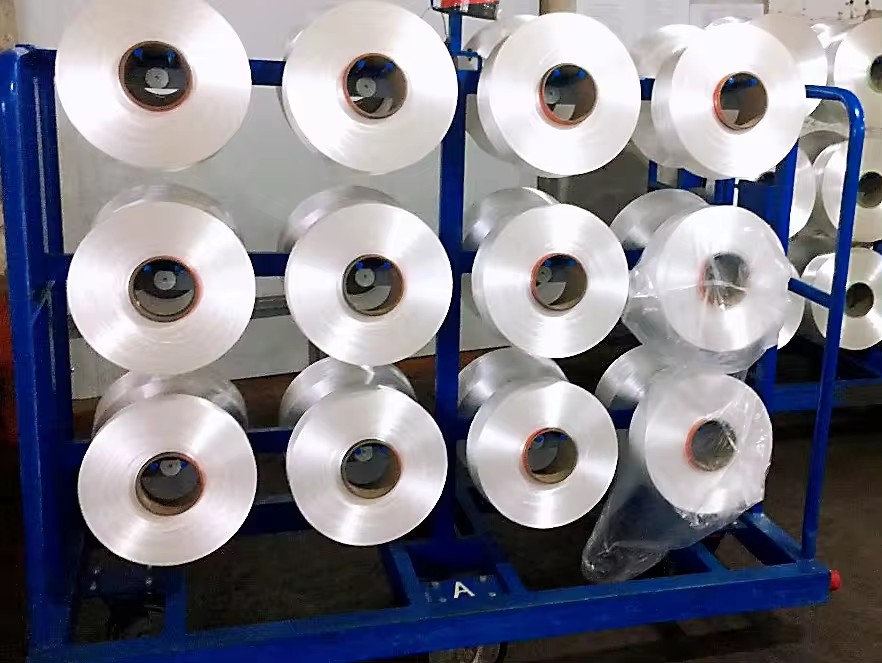
100% Polyester POY
FAQ: People Also Ask About Polyester POY
1. What is Polyester POY used for?
Polyester POY is a partially oriented filament yarn mainly used as a feedstock to produce DTY (draw textured yarn) and FDY (fully drawn yarn). These downstream yarns go into knits, wovens, home textiles, and technical fabrics.
2. How is Polyester POY different from DTY and FDY?
Polyester POY is incompletely oriented and is not usually used directly in fabric. DTY is draw-textured from POY to add bulk and elasticity, while FDY is fully drawn from POY for high-stability, smooth yarns.
3. Why does POY quality matter if I only buy finished yarn?
Poor POY quality leads to unstable DTY/FDY: more breaks, higher CVm, more barre, weaker fabrics, and inconsistent shades. Even if you only buy finished yarns, their stability and reproducibility depend heavily on the input POY.
4. Can Polyester POY be made from recycled materials?
Yes. Many producers now spin recycled Polyester POY from rPET chips. When properly engineered, rPET-based POY can meet mainstream performance requirements while supporting sustainability goals and recycled-content claims.
5. How can I evaluate a Polyester POY supplier?
Check their technical data (tenacity, elongation, Uster stats), lab capabilities, sustainability credentials, consistency track record, and responsiveness. Working through a specialized intermediary like TextileSupplyChain can make comparisons more objective and structured.
Polyester POY Is Where Smart Yarn Sourcing Starts
If you treat Poliester POY as a “black box input”, you leave fabric performance, sustainability, and production stability to chance. If you treat it as a strategic, spec-driven decision point, you gain control over:
-
How your yarn behaves in spinning and texturing
-
How your fabrics feel, look, and age in real use
-
How credibly you respond to policy and sustainability demands
From understanding the role of Polyester POY in global yarn manufacturing, to following how it will shape the industry landscape in the next few years, to using concrete specs like 150/48F for specific applications, the path is the same: better data, clearer requirements, and closer collaboration between technical teams and sourcing.
With platforms like TextileSupplyChain aggregating know-how, case studies, and supplier capabilities, you don’t have to navigate this alone. You can turn Polyester POY from an overlooked intermediate into a powerful lever for product quality, brand reputation, and long-term competitiveness.
Dr. Elena Markovic, a fiber engineering specialist cited in multiple global filament studies, explains it this way: “POY is the genome of DTY. If the molecular orientation, finish chemistry, or filament uniformity is unstable at the POY stage, no amount of downstream processing can fully correct it. The smartest brands now source POY with the same rigor traditionally reserved for final yarn.”This perspective reinforces the core argument: controlling POY means controlling your supply chain. Whether you’re chasing softer athleisure fabrics, cleaner dyeing performance, or compliance-driven recycled content, the leverage point is the same—specify POY precisely, measure it consistently, and align it with real application needs. Platforms like TextileSupplyChain make this shift easier by translating technical data into actionable sourcing decisions, enabling even mid-size brands to engineer fabrics, not just buy yarn.
Oleh Benang
Produk Fitur
-
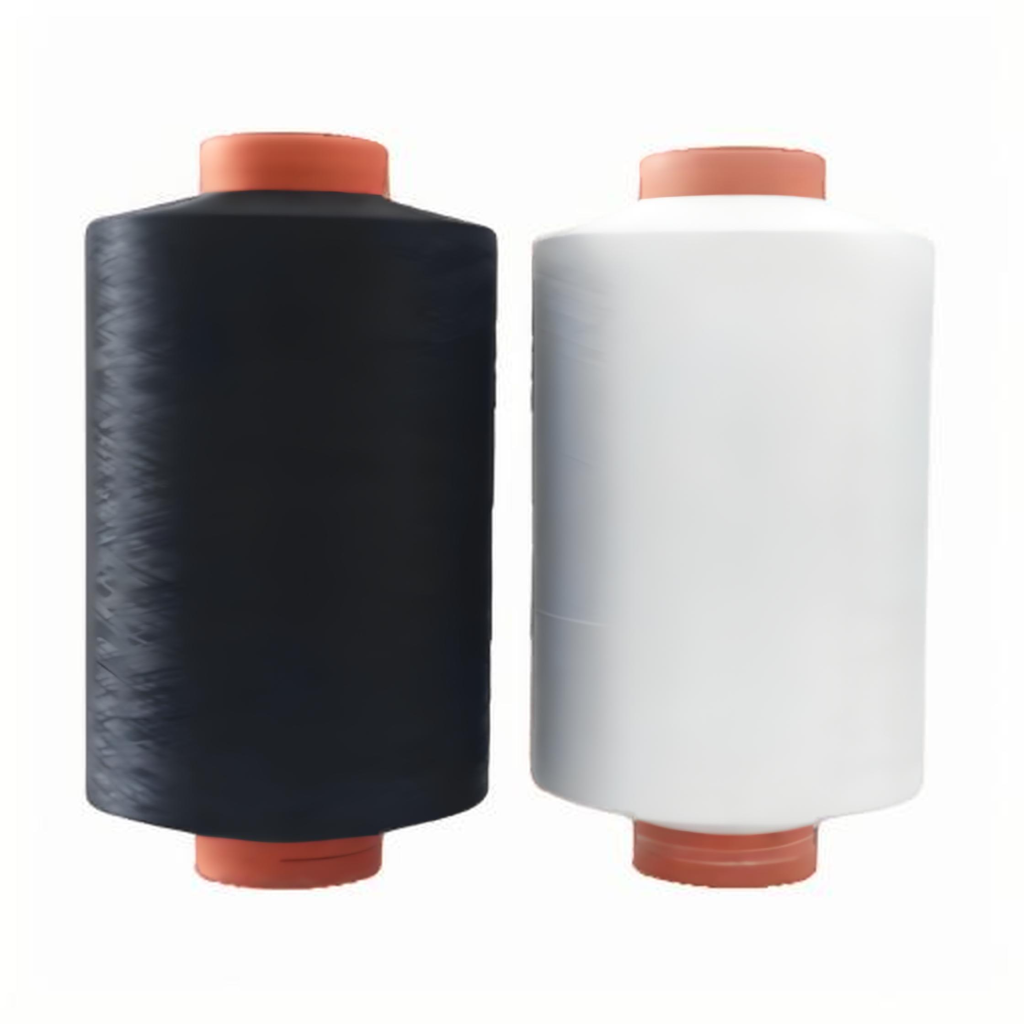 Benang Poliester DTY 100D / 144F
Benang Poliester DTY 100D/144F: Panduan Utama untuk ...
-
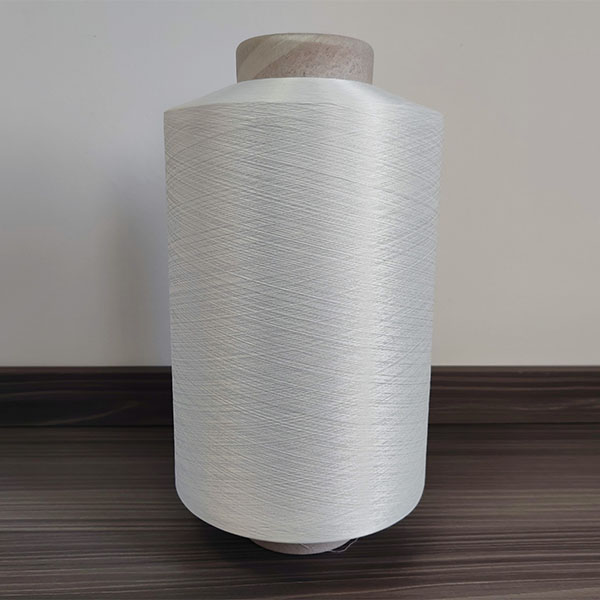 Benang Poliester DTY 100D / 96F
Benang Poliester DTY 100D/96F: Benang Poliester yang Lembut dan Stabil ...
-
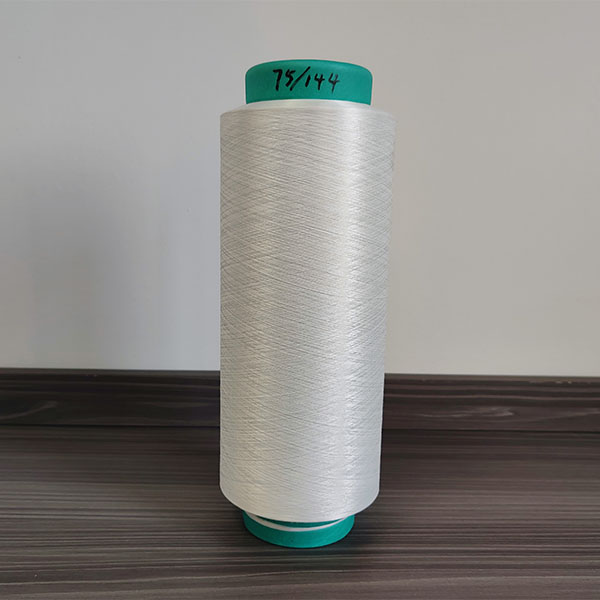 Benang Poliester DTY 75D / 144F SIM
Benang Poliester DTY 75D/144F SIM: Pilihan Utama untuk ...